
Expect to pay roughly $15 to $45 per linear foot installed, depending mostly on material and site conditions. A typical 150-foot residential fence costs in the low thousands to mid thousands of dollars total. Gates, slope, soil, and permits push the number up from there. Measure your perimeter and collect three contractor quotes before you commit to a budget.
TL;DR:
- Fence installation costs range from $15 to $45 per foot, with most homeowners paying between $20 and $30 per foot for standard projects.
- Material choice impacts the total cost more than any other factor, with wood being the lowest and high-end metal options the most expensive.
- Site conditions like rocky soil or steep slopes can significantly increase labor costs, while permits and gate additions also add to the overall price.
- DIY fence projects can reduce material expenses but often incur risks and longer timelines, especially in complex terrain or when permits are required.
- Using a 3D planning tool to visualize layout and generate live cost estimates before requesting bids can help prevent budget overruns.
Table of Contents
- How Much Does Fence Installation Cost per Foot?
- What Does Each Fencing Material Cost?
- What Drives Fence Costs Up (Gates, Terrain, Permits)?
- Is It Cheaper to Install a Fence Yourself?
- How Do You Estimate Your Own Fence Project?
- What Should You Ask Contractors for a Fence Quote?
- How Modern Planning Tools Reduce Cost Uncertainty
- A Practical Rule of Thumb for Fence Budgets
- Plan Your Fence in 3D Before You Call a Single Contractor
- Sources
- FAQ
How Much Does Fence Installation Cost per Foot?
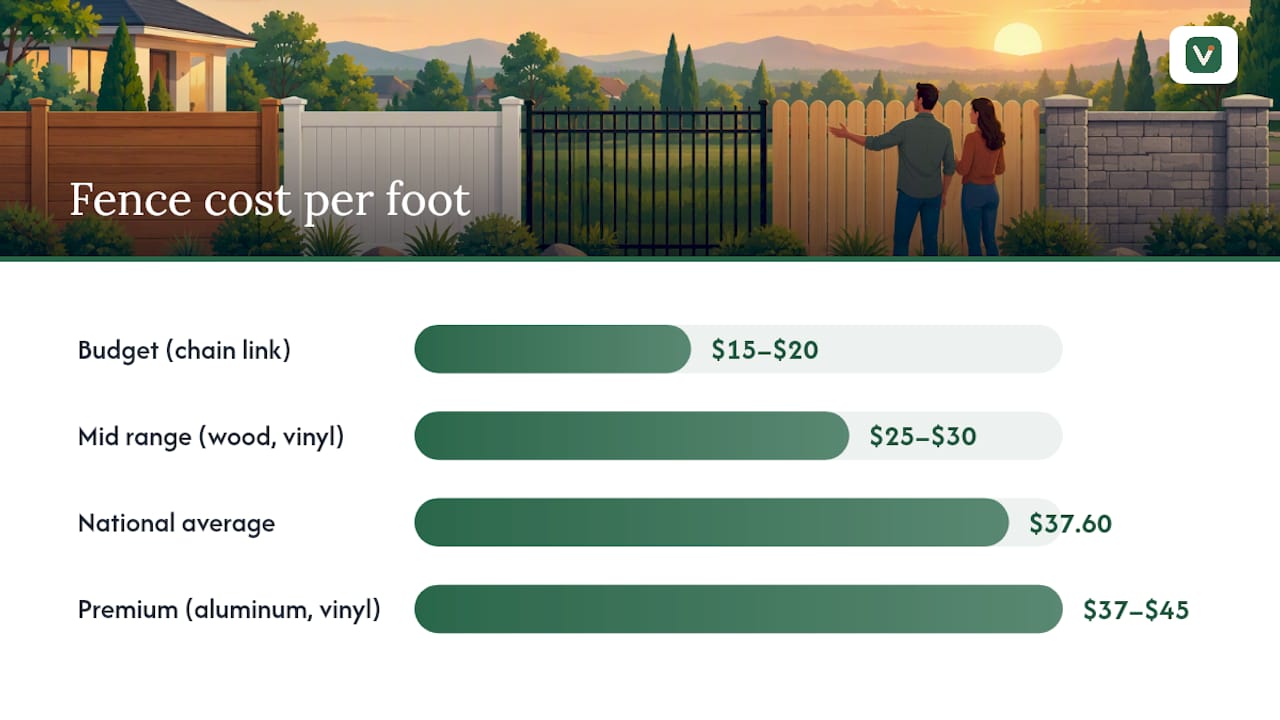
The national installed cost per linear foot lands between $15 and $45, with most homeowners landing in the $20 to $30 range once material and labor are combined. A separate 2026 cost index puts the national average at $37.60 per linear foot across common materials, which tells you the low end of that range is realistic only for basic chain link or budget wood.
At the low end ($15/ft), a 150-foot fence runs about $2,250, and 200 feet costs roughly $3,000. At a typical mid range ($25 to $30/ft), the same projects land between $3,750 and $6,000 for 150 feet, or $5,000 to $6,000 for 200 feet. At the high end ($45/ft and up, common for ornamental metal or premium vinyl), 150 feet can top $6,750, and 200 feet can exceed $9,000.
| Cost tier | Per linear foot | 150 ft total | 200 ft total |
|---|---|---|---|
| Budget (chain link, basic wood) | $15–$20 | $2,250–$3,000 | $3,000–$4,000 |
| Mid range (standard wood, vinyl) | $25–$30 | $3,750–$4,500 | $5,000–$6,000 |
| Premium (aluminum, high-end vinyl) | $37–$45 | $5,550–$6,750 | $7,400–$9,000 |
Quick fact: the average U.S. homeowner spends between $2,000 and $5,000 on a full fence installation, which lines up with a mid-size yard using standard materials.
Spring and early summer bring longer lead times and tighter contractor availability, which nudges quotes upward during peak season.
What Does Each Fencing Material Cost?
Material choice swings your total more than almost any other variable. Here's what 150 feet typically costs by material, based on current installed per-foot benchmarks:
- Wood (privacy or picket): $28–$50/ft installed, or about $4,200–$7,500 for 150 feet. Cedar and pressure-treated pine dominate this category. Expect to restain or reseal every 2 to 3 years, which adds up over a couple of decades.
- Chain link: $17–$28/ft installed, or roughly $2,550–$4,200 for 150 feet. It's the cheapest option upfront and needs almost no maintenance, but it offers no privacy and dents over time.
- Vinyl: $30–$52/ft installed, or about $4,500–$7,800 for 150 feet. Higher sticker price, but it doesn't rot, warp, or need repainting, so lifetime cost often beats wood.
- Aluminum or wrought iron: Typically $40–$75/ft installed for decorative or security-grade metal, pushing 150 feet to $6,000–$11,250. This tier suits pool enclosures and curb-appeal projects rather than tight budgets.
- Composite: $35–$60/ft installed, landing 150 feet around $5,250–$9,000. It mimics wood's look without the upkeep, making it a common upgrade pick for homeowners tired of annual staining.
Wood wins on classic looks and lower entry price but loses on long-term upkeep. Vinyl and composite cost more initially but often win over a 15 to 20 year horizon once you factor in staining, sealing, and board replacement. Chain link stays the practical choice for backyards, dog runs, or rental properties where appearance matters less than price.
What Drives Fence Costs Up (Gates, Terrain, Permits)?
Terrain and soil conditions change labor time more than most homeowners expect. Rocky or clay-heavy soil can require augering, hand digging, or even a jackhammer for post holes, and HUD's sitework research confirms site preparation is a major swing factor in construction pricing generally. Steep slopes also demand stepped or racked panel installation, which takes longer per foot than flat ground.
Gates add real money fast:
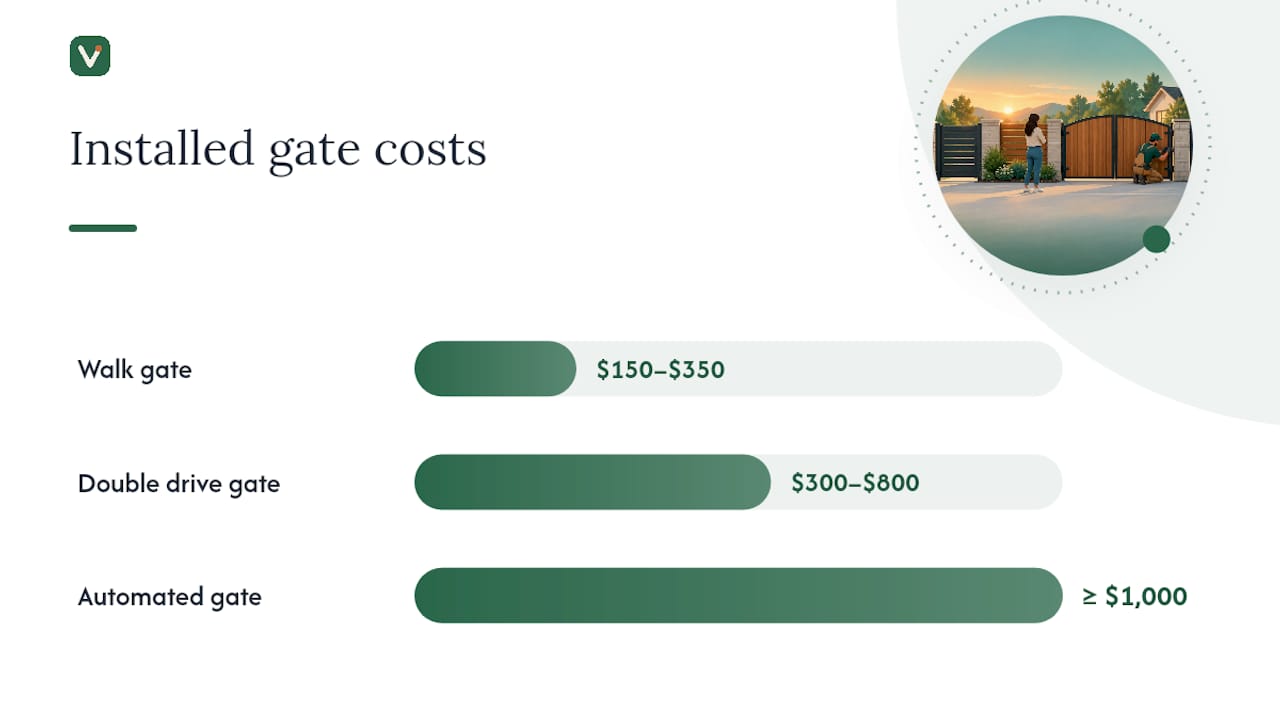
- Walk gates: $150–$350 installed
- Double drive gates: $300–$800 installed
- Automated gates: often $1,000 and up once you add hardware, wiring, and a motor
Add-on costs that catch homeowners off guard include permit fees ($50–$300 depending on your municipality), old fence removal and disposal ($3–$15 per linear foot), and rocky soil or steep grade surcharges ($5–$15 or more per linear foot). Many HOAs also require design approval before a permit gets pulled, which can add weeks to your timeline even if it doesn't add dollars.
Pro Tip: Ask your contractor to itemize permit, removal, and terrain surcharges separately in the written quote. Bundled "site prep" line items are where hidden markups tend to hide.
Is It Cheaper to Install a Fence Yourself?
A 150-foot wood privacy fence installed by a pro typically costs $4,200 to $7,500 and takes a crew 1 to 3 days. Doing it yourself cuts material costs (you skip labor markup) but stretches the timeline to a full weekend or longer, plus rental fees for a post-hole digger or auger.
- Material-only DIY cost: Roughly $8–$20 per foot for wood, based on retail lumber and fencing pricing, meaning materials alone for 150 feet run $1,200 to $3,000.
- Hidden DIY risks: Utility strikes from digging without a locate request, improper post depth that leads to leaning fences within a year or two, and panel misalignment on sloped lots.
- Rework costs: Fixing a fence with shallow-set posts often costs more than hiring it out right the first time, since you're paying to remove and reset concrete footings.
- When a pro is worth it: Sloped yards, rocky soil, underground utilities, or any project involving a permit-required retaining element. Contractors specifically flag underground utility risk as a reason DIY savings can evaporate fast.
How Do You Estimate Your Own Fence Project?
Building your own rough budget takes five steps and about 20 minutes with a tape measure or property survey.
- Measure your linear footage. Walk the perimeter you're fencing, including any gate openings, and round up to the nearest 10 feet.
- Pick a material and its per-foot rate. Use the ranges above, for example, $28–$50/ft for wood.
- Add gate costs separately. A single walk gate adds $150–$350 on top of your linear footage total.
- Layer in site-specific allowances. Add $3–$15/ft for old fence removal if applicable, and $5–$15/ft extra for rocky soil or slope.
- Build in a 10% to 20% contingency. Permit fees, unexpected soil conditions, or a mid-project material upgrade are common enough to plan for.
Worked example: 150 linear feet of wood privacy fencing at $32/ft = $4,800.
Pro Tip: Run this math in a 3D planning tool before you call contractors. Adjusting panel counts or gate placement live shows you the cost impact instantly, instead of waiting for a revised quote days later.
What Should You Ask Contractors for a Fence Quote?
Ask every contractor the same set of questions so you're comparing apples to apples, not just bottom-line numbers.
- Does the quote include concrete footings, or is that a separate line item?
- What's the post spacing, and does wider spacing lower cost but reduce stability?
- Is old fence removal and disposal included, and at what per-foot rate?
- What warranty covers materials versus labor, and for how long?
- Who pulls the permit, and is that fee included in the total?
Red flags worth walking away from: no proof of license or insurance, a scope of work that's vague about materials or post depth, and any contractor demanding full payment upfront. A partner directory like GATE CON's service area page shows how legitimate gate specialists list credentials and coverage areas clearly, which is a useful benchmark for what a transparent quote should look like.
How Modern Planning Tools Reduce Cost Uncertainty
Quoting guesswork usually comes from vague scope, not dishonest contractors. A 3D planning tool like Veete lets you lay out your fence line, gates, and posts visually, with live pricing tied directly to each object in the plan.
Move a gate or extend a run by 20 feet, and the estimate updates instantly instead of waiting on a revised paper quote. That live link between design and dollar amount is what reduces scope disputes and supports side-by-side contractor comparisons, since you're handing every bidder the exact same measurements and material list. Build your rough plan before you request bids, not after.
A Practical Rule of Thumb for Fence Budgets
That number lands close to reality for most standard wood or vinyl projects.
Measure twice, get three quotes, and sketch your layout in a planning tool before you sign anything. The homeowners who overspend are almost always the ones who skipped that last step.
— Rokas
Plan Your Fence in 3D Before You Call a Single Contractor
Veete turns your yard into a live 3D model where every fence panel, post, and gate carries its own real-time price, tied directly to your own material rates instead of a generic estimate.

That matters most right when you're about to request contractor bids: instead of guessing at linear footage or forgetting a gate in your mental math, you hand every contractor the same precise plan and quantity list. Adjust the layout, swap materials, or add a gate, and the cost updates instantly, so you catch budget surprises before a contractor does. Veete offers a free plan with no card required, or a Home plan at $48 per year for full project features. Start sketching your fence line and get your live estimate before your next quote request.
Sources
These sources supply the per-foot benchmarks and labor breakdowns used throughout this guide: NerdWallet's national fence cost averages, UseCalcPro's 2026 material cost ranges, the Fence Cost Index for state-level pricing, and Quotsey's breakdown of add-on surcharges.
- How Much Does It Cost to Install a Fence in 2026? - NerdWallet
- How Much Does a Fence Cost in 2026? (National Averages & Material Prices) | UseCalcPro
- Fence Cost Index — Q3 2026 National $/ft by Material & State
- Fence Installation Cost: $15–$75/Ft by Material (2026 Prices) | Quotsey
FAQ
How much does 200 feet of fencing cost?
At typical installed rates of $20 to $30 per linear foot, 200 feet runs about $4,000 to $6,000 for standard materials like chain link or basic wood. Premium materials such as aluminum or high-end vinyl can push that total past $9,000.
How much does it cost to install a 40-foot fence?
A 40-foot fence typically costs between roughly $600 and $2,000 installed, depending on material, though small projects often carry a higher effective per-foot rate since minimum job fees and delivery costs get spread over less footage. Adding a gate to a short run can add another $150 to $350.
How much does Lowe's charge to install a fence?
Big-box retailers generally don't install fencing directly. They typically connect you with a local contractor partner, and pricing follows the same $15 to $45 per linear foot range you'd get from an independent installer.
Is it cheaper to install a fence yourself?
DIY saves on labor markup, cutting a typical wood fence's cost roughly in half since labor makes up about 50% of the installed price. But mistakes like shallow post depth or utility strikes can erase those savings through rework, and tool rental costs add up on top of materials.
What's the fastest way to get an accurate fence budget?
Measure your exact linear footage including gate openings, then build a plan in a tool like Veete that links live pricing to your layout. Use that plan to request three contractor quotes so you're comparing identical scope, not guessing at differences.