
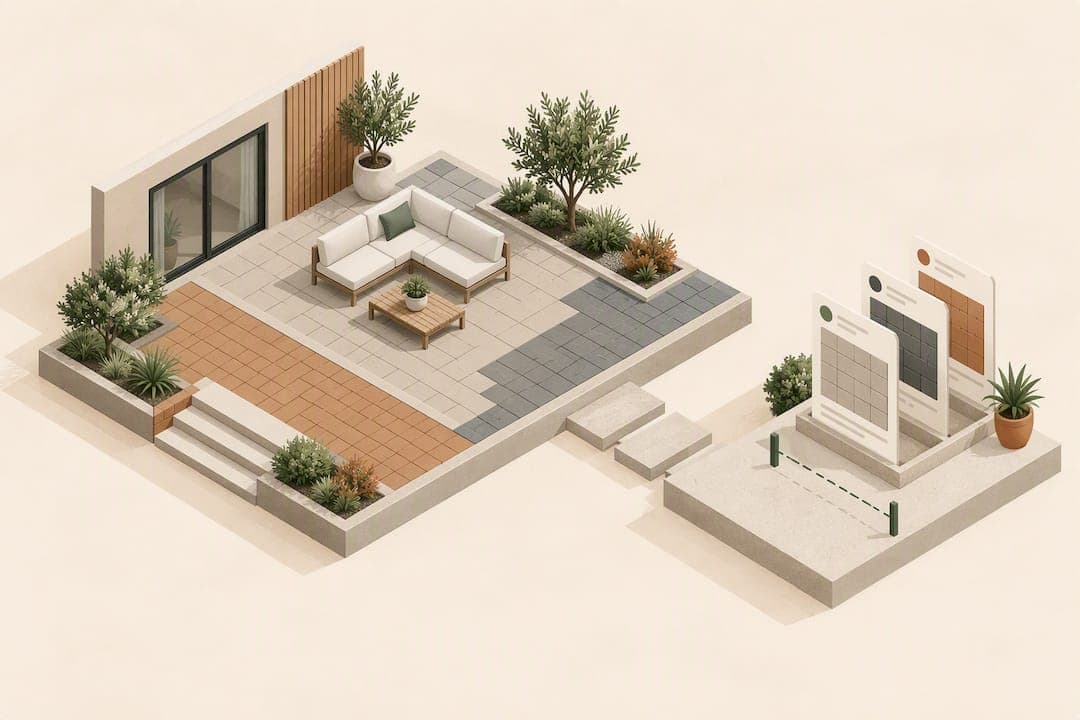
Most homeowners pay a typical range of several dollars per square foot installed for a paver patio in 2026, with materials, labor, and site prep all included. A small 100 square foot patio typically costs a few thousand dollars, while a common 300 square foot layout costs several thousand dollars. Material choice, ground conditions, and design complexity push you toward the low or high end.
TL;DR:
- Larger patios benefit from lower per-square-foot costs as fixed site preparation and permit fees are spread across a bigger area.
- The cost of paver materials varies from $8 per square foot for gravel-set pavers to $40 for porcelain, with natural stone and permeable options costing more.
- Unforeseen underground conditions, such as poor soil or roots, can significantly increase overall expenses and should be evaluated before bidding.
- Professional installation costs range from $8 to $15 per square foot, but DIY may save money only if the project is simple and terrain is manageable.
- Accurate, comparable bids depend on clear specifications for base depth, material brands, jointing, and contingency allowances; small bid gaps often hide unnoted base cuts.
Table of Contents
- How Much Does a Paver Patio Cost Per Square Foot?
- What Do Different Paver Materials Cost Installed?
- What Actually Drives the Cost of a Paver Patio?
- Should You Install a Paver Patio Yourself or Hire a Pro?
- How Should You Budget for Permits and Contingencies?
- How Do You Get an Accurate, Comparable Quote?
- What Does Long-Term Maintenance and Resale Value Look Like?
- Planning Wisely Beats Chasing the Lowest Bid
- Plan Your Patio Budget Before You Call a Contractor
- Sources
- FAQ
How Much Does a Paver Patio Cost Per Square Foot?
That per square foot figure covers excavation, base material, the pavers themselves, labor, and basic edge restraints generally. Cheap gravel-based patios can cost less per square foot, while natural stone with intricate cutting can cost significantly more, according to Smartscaping's pricing data.
Here's how that translates across common patio dimensions:
- 100 sq ft: $1,200 to $3,000
- 144 sq ft (12x12): $1,730 to $4,320
- 200 sq ft: $2,400 to $6,000
- 300 sq ft: $3,600 to $9,000
- 400 sq ft: $4,800 to $12,000
- 20x20 (400 sq ft): same range as above, since it's the same square footage in a square footprint
Notice that the per-square-foot rate doesn't stay flat as the project grows. A contractor's mobilization costs, equipment rental, and permit fees stay roughly the same whether you're paving 100 square feet or 400. Spread across a bigger job, those fixed costs shrink on a per-square-foot basis. That's why a 400 square foot patio often prices out closer to $11 to $28 per square foot installed, even though a tiny 80 square foot patio might run $14 to $32 per square foot for the identical paver and base spec. Homewyse's unit-cost breakdown shows this pattern clearly when you compare its small-job versus larger-job line items.
Shape matters too. A simple rectangle is cheaper to lay than a curved or multi-tiered design, since curves mean more cutting, more waste, and slower labor. If you're weighing a 12x12 patio against a 20x20 layout, the bigger space usually costs more in total dollars but less per square foot, assuming the ground conditions are similar.
What Do Different Paver Materials Cost Installed?
Material choice markedly affects total cost, with concrete pavers generally more budget-friendly and natural stone and porcelain priced higher due to appearance, lifespan, or fabrication complexity.
| Material | Installed cost per sq ft | Notes |
|---|---|---|
| Concrete pavers | $10 to $20 | Widest color and shape selection, easiest to source and replace |
| Brick pavers | $12 to $20 | Classic look, moderate labor, holds color well over decades |
| Interlocking/permeable pavers | $15 to $30 | Requires specialized base; may qualify for stormwater incentives |
| Porcelain pavers | $20 to $40 | Low porosity, resists staining, needs precise leveling |
| Flagstone/natural stone | $18 to $30 | Irregular shapes mean more labor-intensive cutting and fitting |
| Gravel-set pavers | $8 to $15 | Fastest install, the least structural support, best for low-traffic areas |
These ranges reflect national averages compiled by BobVila's patio cost analysis and HireLocal's installation survey, both of which flag base depth and material sourcing as the biggest swing factors within each category.
Permeable pavers deserve a closer look. They let water drain through the surface into a stone reservoir below rather than running off into storm drains, according to USGS research on permeable pavement. Some municipalities offer stormwater credits or fee reductions for permeable installations, which can offset part of the higher upfront base cost. The tradeoff: that specialized base adds $2 to $5 per square foot compared to a standard patio base, and the system needs periodic vacuum-assisted maintenance to keep it draining properly over time.
What Actually Drives the Cost of a Paver Patio?
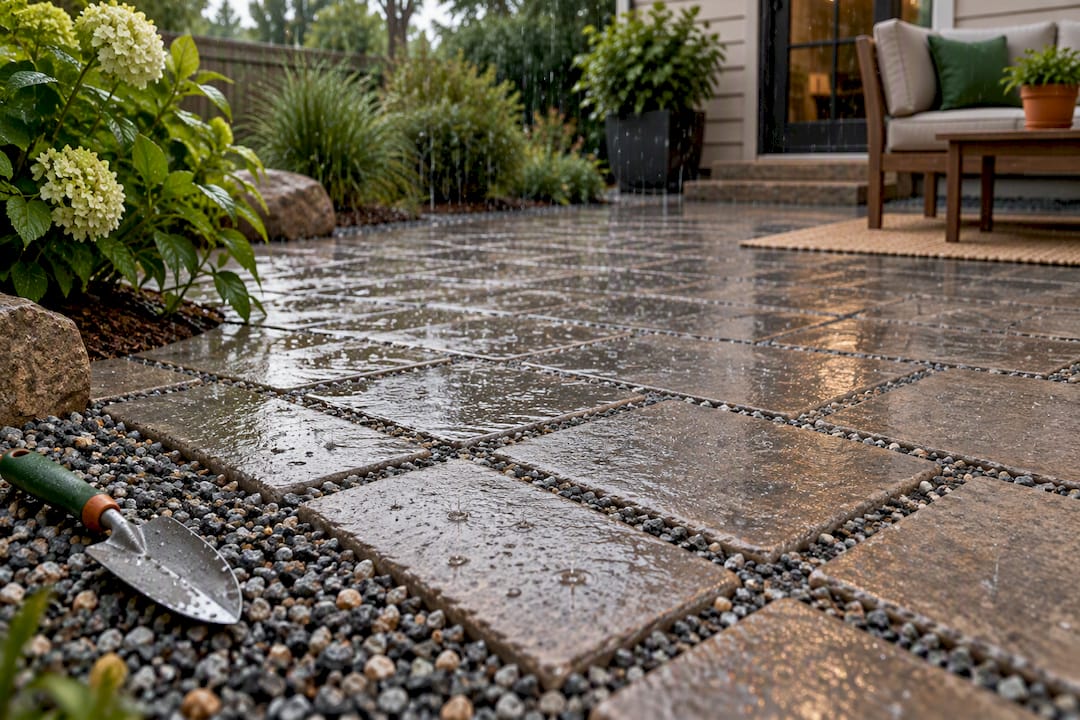
Two patios of the same size and material can price out thousands of dollars apart, and the reason almost always comes down to what's happening underground. Soil type dictates how deep your base needs to be. Clay-heavy or silty soil compacts poorly and often calls for a thicker aggregate base plus a geotextile fabric layer to keep the base from mixing with the subgrade over time, a point ICPI's technical guidance makes clear for residential installations.
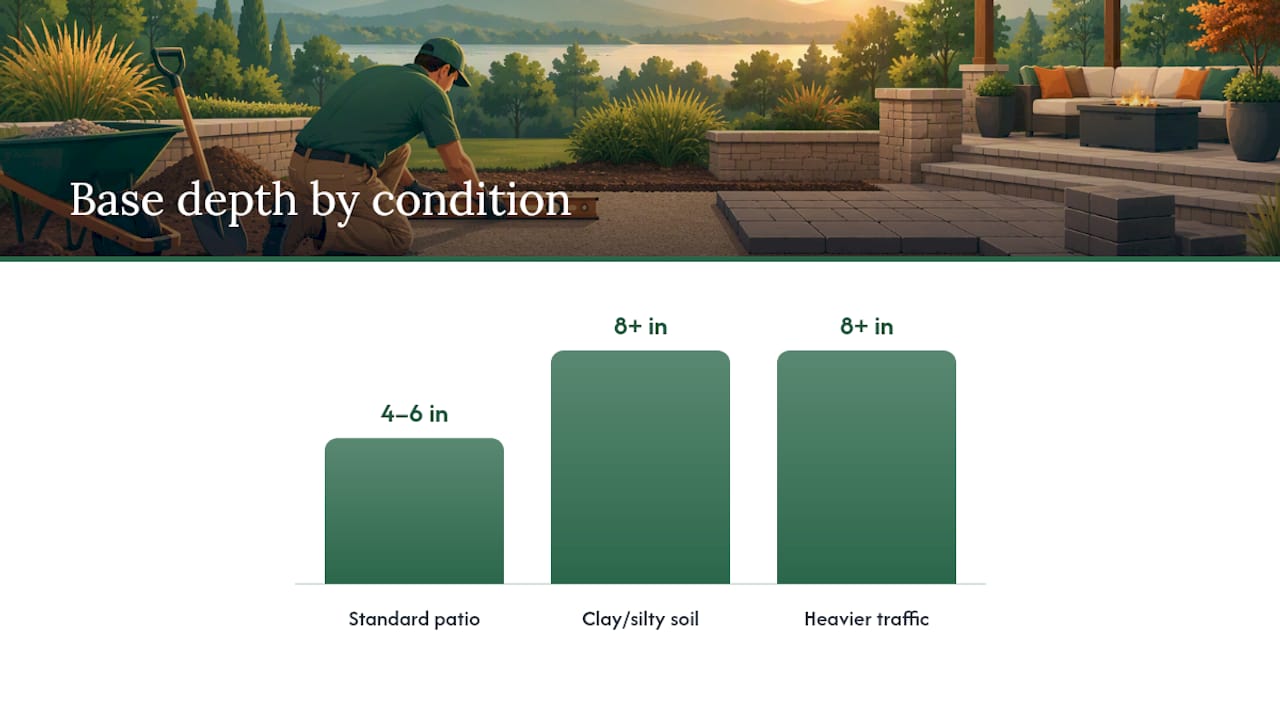
Rock removal, tree root cutting, and poor drainage on your lot can each add hundreds of dollars before a single paver goes down. Checking your local soil profile through the USDA's Web Soil Survey before you get quotes gives you a realistic sense of what you're working with.
Other line items that shift the total:
- Base aggregate depth: a standard patio often needs 4 to 6 inches of compacted base, but heavier traffic areas or poor soil may require 8 inches or more
- Edge restraints (plastic, aluminum, or concrete) to keep pavers from spreading
- Drainage additions like a French drain or graded slope away from the house
- Pattern complexity: herringbone and basket-weave patterns take longer to lay than a simple running bond
Pro Tip: Ask every contractor to specify their base depth and aggregate type (look for ASTM #57 or #2 references) in writing. A bid that skips this detail is often a bid that's cutting corners on the one thing you can't see once the pavers go down.
Should You Install a Paver Patio Yourself or Hire a Pro?
Professional installation for a mid-size patio typically runs $8 to $15 per square foot in labor alone, with a two- or three-person crew finishing a 300 square foot patio in two to four days. DIY cuts that labor cost, but it demands renting a plate compactor, sourcing and hauling base material, and getting the grading right, which can stretch a weekend project into two or three weekends for a first-timer.
- DIY makes sense for small, simple rectangular patios with decent existing drainage and no major grading needed.
- Hire a professional when you're dealing with steep grade changes, drainage problems, permeable paver systems, or any design with curves and multiple levels.
- Watch for long-term risk either way. Poor base compaction leads to frost heave in cold climates and uneven settling within a year or two, which means pulling up pavers and redoing the base, often at higher cost than doing it right the first time.
Look for a contractor with ICPI certification as a baseline trust signal. It doesn't guarantee perfect work, but it means they've been trained on the industry's own base and installation standards.
How Should You Budget for Permits and Contingencies?
Build in a 10 to 20% contingency on top of your material and labor estimate. That buffer covers the things that only show up once digging starts: unexpected rock, an old tree stump, or a drainage fix nobody anticipated.
- Permit fees vary widely by municipality, but many local building departments require one for patios over a certain square footage or height above grade
- Budget separately for utility locates if you're running electrical for lighting or gas lines for a fire feature
- Factor in disposal costs for excavated soil and old hardscaping if you're replacing an existing patio or deck
- Add staging costs if equipment access requires temporary fencing or lawn protection
How Do You Get an Accurate, Comparable Quote?
Contractor bids on the same project can vary by thousands of dollars, and most of that gap comes from what's included versus quietly left out. Use this checklist before you compare a single number:
- Ask for excavation depth and confirmed base specs (aggregate type and thickness).
- Request the paver brand, model, and thickness in writing, not just "concrete pavers."
- Confirm compaction method: plate compactor passes, not just "compacted."
- Get the edge restraint type and joint material (polymeric sand versus regular sand) spelled out.
- Ask what waste allowance is built in for cuts and breakage, typically 5 to 10%.
- Get a written timeline, warranty terms, and policy on change orders if conditions differ once digging starts.
- Ask for two or three references from jobs completed at least a year ago, so you can see how the base held up.
Pro Tip: If one quote comes in dramatically lower than the others, check the base depth first. Shaving an inch or two off the aggregate base is the easiest way for a contractor to shave hundreds off a bid, and it's the repair you'll regret in three winters.
What Does Long-Term Maintenance and Resale Value Look Like?
Pavers hold up well with modest upkeep: resealing every two to three years, replenishing polymeric sand in joints as needed, and for permeable systems, periodic vacuum maintenance to keep water draining through rather than pooling on top. Compared to poured concrete, pavers have a real repair advantage. If one paver cracks or stains, you lift it and swap it, no patching or recoloring required.
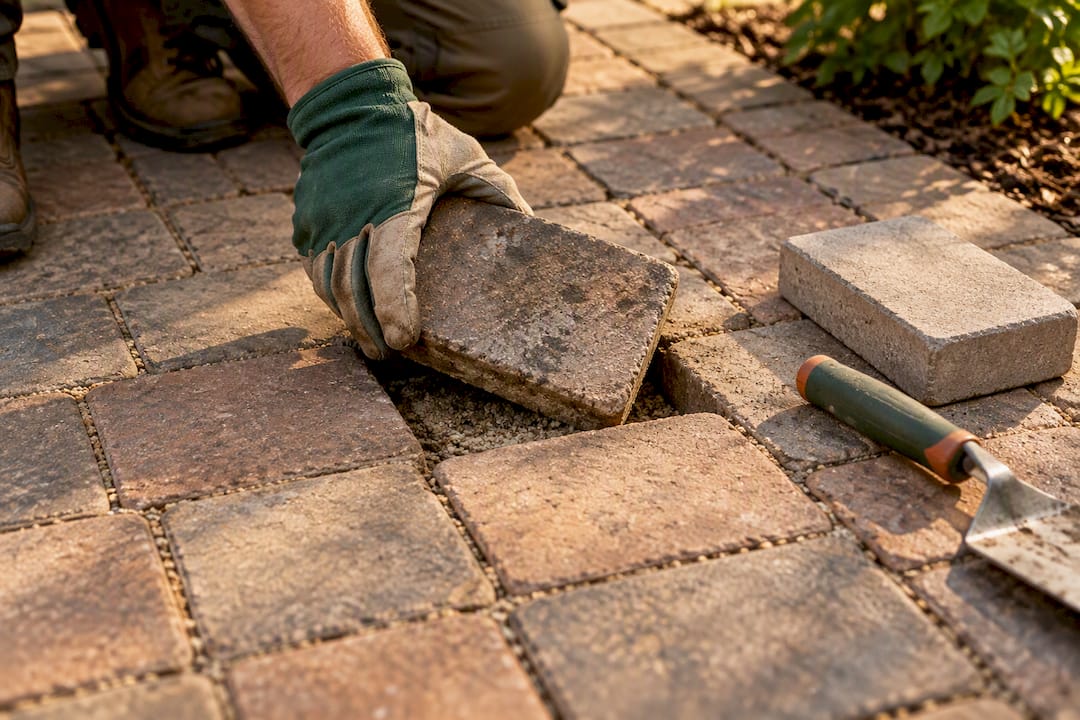
On resale, outdoor hardscaping tends to perform well. The NAR Remodeling Impact Report found homeowners recover a strong share of what they spend on outdoor patio projects when they sell, making a well-built paver patio one of the more resale-friendly upgrades in the yard.
Planning Wisely Beats Chasing the Lowest Bid
The homeowners who end up happiest with their patio spent their planning energy on base depth and drainage, not on paver color. Get the invisible parts right first. A 3D planning tool helps here too, since it links every design object in your layout to a live, itemized price, so you catch scope creep before it becomes a change order.
— Rokas
Plan Your Patio Budget Before You Call a Contractor
There are tools that give you something a phone quote never can: a live, itemized cost estimate tied to every object in your actual patio design, updated automatically the moment you resize, swap materials, or add a feature.
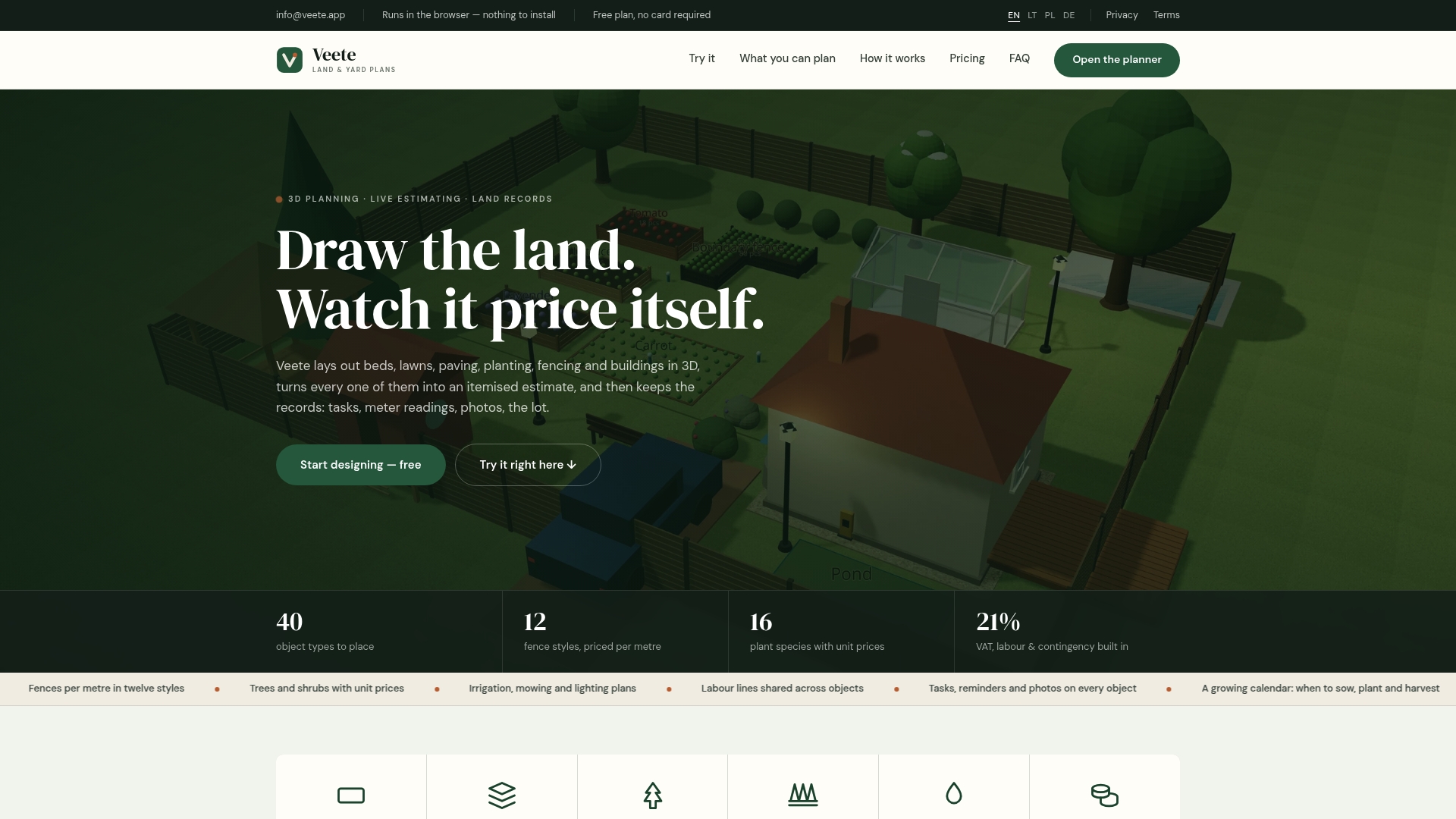
Sketch your patio footprint in 3D, drop in the paver material, seat wall, or fire pit you're considering, and watch the pricing update in real time rather than waiting on a callback. Because the numbers stay linked to your design, you get a consistent, exportable materials list and quote-ready plan to hand every contractor you're comparing, so their bids answer the exact same scope instead of three different guesses. Start with the Free plan with no card required, or move up to Home for $48 per year (or $6 per month) once you're ready to export full plans and shopping lists. Try it at Veete and bring a finished layout to your next contractor meeting.
Sources
- Evaluating the potential benefits of permeable pavement (USGS)
- Paver Patio Points (ICPI)
- Cost to Install Brick Paver Patio (Homewyse)
- Paver patio cost: What to expect (BobVila)
FAQ
How Much Does a 20x20 Paver Patio Cost?
A 20x20 patio covers 400 square feet, which typically runs $4,800 to $12,000 installed at the standard $12 to $30 per square foot range. Your final number depends heavily on paver material and how much site prep the ground needs.
Is a Paver Patio Cheaper Than Concrete?
Poured concrete usually costs less upfront than pavers, but pavers often even out over time because you can repair individual pieces instead of patching or replacing an entire slab. Pavers also tend to recover a strong share of their cost at resale, which factors into the long-term comparison.
How Much Does a 12x12 Paver Patio Cost?
A 12x12 patio is 144 square feet, landing around $1,730 to $4,320 installed depending on material and base requirements. Smaller patios often price slightly higher per square foot than larger ones because fixed costs like equipment delivery spread across fewer square feet.
How Much Does a 20x20 Patio Cover Cost If I Add a Fire Pit or Seat Wall?
Add-ons like a fire pit typically run an extra several hundred to a few thousand dollars, and a seat wall can add roughly $20 to $40 per linear foot on top of your base patio cost. Planning these into your design early, rather than as an afterthought, keeps your total estimate accurate from the start.