
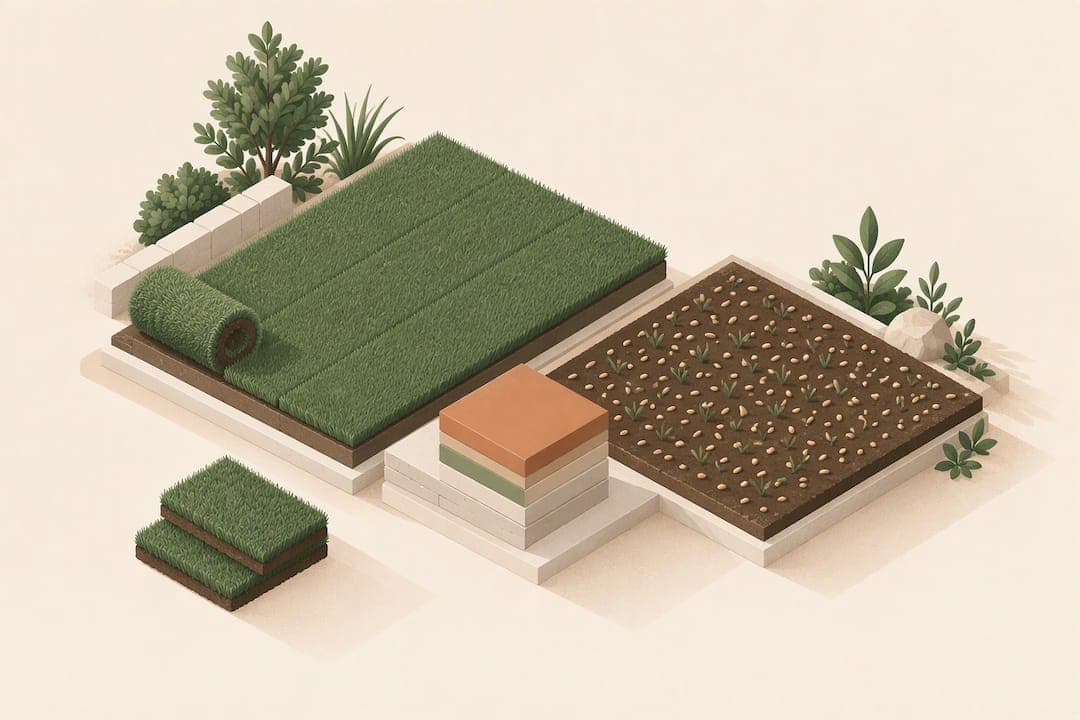
Sod wins when you need instant cover, erosion control, or fast curb appeal and can pay a premium for it. Seed wins when you want lower cost, more grass variety, and roots that grow deep into your native soil. Your choice comes down to three things: how much you can spend, how fast you need a usable lawn, and whether your site faces erosion or slope problems.
TL;DR:
- Sod costs $0.60 to $1.29 per square foot versus $0.10 to $0.30 for seed, which takes several weeks before foot traffic.
- Prepare the bed before delivery, install sod within 24 hours, and water daily for 10 to 14 days until it roots.
- Seed offers more cultivar choices and deeper long term roots, but cool season grasses establish best in early fall or spring.
- Keep seeded soil lightly and consistently moist until germination, and avoid sowing outside the planting window for your grass type.
- Full renovation is recommended when weeds or dead turf cover 40% to 50% of the lawn; smaller bare patches can be spot seeded or sodded.
Table of Contents
- Sod vs seed at a glance: cost, time, and best uses
- What sod is and how it gets installed
- How seeding works and why roots grow deeper
- Real numbers: cost, timeline, and first-season care
- A simple checklist to decide between sod and seed
- Installing and caring for a new lawn the first season
- Why lawns fail and how to fix them
- A practical take on choosing between sod and seed
- Plan your lawn project with Veete before you buy anything
- FAQ
- Sources
Sod vs seed at a glance: cost, time, and best uses
Sod costs more upfront but gives you a lawn you can walk on almost immediately. Seed costs far less but asks you to wait weeks before the grass can handle foot traffic.
| Factor | Sod | Seed |
|---|---|---|
| Cost per square foot | $0.60–$1.29 (BobVila) | $0.10–$0.30 (BobVila) |
| Time to safe use | Rooted in about 10–14 days (Purdue Extension) | Several weeks from germination to first mowing |
| Root depth | Shallower at first, grown on a cut mat | Deeper over time, grown directly in your soil (University of Minnesota Extension) |
| Grass variety | Limited to what local sod farms grow | Wide range of cultivars for climate and shade |
A few quick rules of thumb help narrow the decision fast:
- Choose sod for slopes, bare erosion-prone patches, or when you need a yard ready for use within two weeks.
- Choose seed when budget matters most or you want a specific cultivar suited to shade or drought.
- Choose sod for small patch repairs where matching a seed blend precisely would be slow and unreliable.
What sod is and how it gets installed
Sod is mature grass grown on a farm, cut with a thin layer of soil attached, usually 0.25 to 0.5 inches deep, and shipped to you on pallets (University of Minnesota Extension). Thinner cuts root faster but dry out faster too, so timing and irrigation after delivery matter more than people expect. Sod has a short shelf life once harvested, generally needing to go into the ground within 24 hours, which means your bed prep has to be finished before the truck arrives.
- Pros: instant cover, immediate erosion protection, minimal weed pressure in the first season.
- Cons: higher cost, fewer variety choices, a short transplant window, and real transplant stress if installation is delayed.
Good contact between the sod and the soil beneath it determines whether roots take hold or the mat dries out and dies. Rolling the lawn after installation presses out air pockets and pushes the roots against moist soil, which speeds up establishment.
Pro Tip: Schedule your sod delivery for the same morning you finish grading, not a day ahead. Pallets that sit in the sun lose moisture fast and the grass underneath can start to yellow within hours.

How seeding works and why roots grow deeper
Seeding puts grass seed directly into your prepared soil, so roots grow straight down into the native ground rather than starting inside a thin transplanted mat. That difference is why seeded lawns tend to develop stronger, deeper root systems over time compared with sod (University of Minnesota Extension). Seeding also opens up far more cultivar choices, letting you match grass type to your exact sun exposure, foot traffic, and regional climate instead of settling for whatever a local sod farm grows.
- Pros: lower cost, far more species and cultivar options, deeper long-term rooting, and easier large-area coverage on a budget.
- Cons: slower to establish, vulnerable to weed competition while bare patches remain, and limited to specific planting windows depending on grass type and season.
Cool-season grasses generally establish best in early fall or spring, while warm-season types need consistently warm soil to germinate well. Get the timing wrong and you're fighting weeds for bare ground instead of growing turf.
Real numbers: cost, timeline, and first-season care
For a typical residential yard, sod generally costs significantly more than seed based on consumer cost estimates (BobVila). Sod roots in about 10 to 14 days under good conditions, confirmed with a simple tug test, while seeded lawns need several weeks of germination and early growth before they can handle regular foot traffic (Purdue Extension).
- Sod needs daily watering during the first 10 to 14 days to keep the thin root mat from drying out.
- Seed needs light, frequent watering, sometimes multiple times a day, until germination is complete.
- Both benefit from a starter fertilizer application at planting, with seeded lawns often getting a second nitrogen-focused application several weeks later to speed establishment (Oregon State University Extension).
A simple checklist to decide between sod and seed
Answer these questions before you buy anything:
- How large is the area? Small patches favor sod for speed; large areas favor seed for cost.
- How much of the existing lawn is weeds or dead grass? Extension guidance generally points toward full renovation with new sod or seed once weeds or dead turf cover more than 40 to 50% of the area.
- Is erosion or slope a concern? Sod holds soil in place immediately; bare seeded ground washes out in heavy rain until roots establish.
- Do you need the lawn usable within two weeks? If yes, sod is close to the only practical option.
- What's your budget ceiling? Seed costs a fraction of sod per square foot, which matters most on larger lots.
Once you've answered those, the remaining steps are straightforward: measure your square footage precisely, test your soil, pick your grass species or sod type based on sun and shade, and schedule your installation or seeding window around your region's recommended planting dates.
Installing and caring for a new lawn the first season
Both methods start the same way: test your soil, grade the area so water drains away from structures, till or loosen compacted ground, and work in topsoil or compost where needed. Skipping this step is one of the most common reasons either method fails (Oregon State University Extension).
For sod, moisten the bed before laying it down, stagger the seams like bricks instead of lining them up, roll the surface to remove air pockets, and water daily until the tug test confirms rooting at around 10 to 14 days (Purdue Extension).
- Rake seed lightly into the soil surface rather than burying it deep.
- Keep the top layer of soil consistently moist with light, frequent watering until seedlings emerge.
- Apply starter fertilizer at planting and follow up 4 to 6 weeks later for seeded lawns.
Once either lawn is established, shift from frequent light watering to deep, infrequent watering cycles. That change trains roots to grow downward in search of moisture, which builds the drought tolerance you want long-term (Kansas State Turf Resources).
Pro Tip: Water sod and seed early in the morning rather than evening. Grass that stays wet overnight is far more prone to fungal disease.

Why lawns fail and how to fix them
Most failures trace back to skipped soil prep, inconsistent watering, or bad timing. Seeding in summer heat or letting sod sit on pallets too long before installation both lead to patchy, weak growth.
- Correct underwatering by increasing frequency immediately; correct overwatering by letting the soil dry between cycles to avoid fungal rot.
- If you missed your seeding window, wait for the next recommended season rather than forcing growth in poor conditions.
- Small bare or dead patches can usually be fixed with spot-sodding or overseeding rather than a full restart.
- Large-scale erosion, widespread dead turf, or persistent drainage problems usually call for a professional assessment.
A practical take on choosing between sod and seed
I lean toward sod for slopes, erosion zones, and front yards where appearance matters immediately. For everything else, especially larger lots, seed wins on cost and root strength. Plan your irrigation capacity before you commit to either, since both methods fail fastest under inconsistent watering.
— Rokas
Plan your lawn project with Veete before you buy anything
Before you commit to a sod delivery or a pallet of seed, it helps to see the real cost side by side. We built Veete as a browser-based 3D planning tool that lets you lay out your lawn, compare sod and seed scenarios, and generate live, itemized cost estimates tied to every element in your design, so changing your mind about materials updates your budget instantly instead of forcing a manual recalculation.
You can start with our free plan, no card required, or check our Home and Pro plans if you want to manage multiple projects and export finished plans for contractors or suppliers. Try planning your lawn in 3D and see your real numbers before you spend a dollar.
FAQ
Can I just lay sod over dirt?
No. Sod needs the same soil preparation seed does, including grading, loosening compacted soil, and often working in topsoil or compost, because laying sod directly on unprepared dirt leads to poor root contact and early failure (Oregon State University Extension). Skipping prep is one of the most common reasons sod projects fail to root properly.
Is it cheaper to reseed or sod?
Seeding is significantly cheaper, typically running $0.10 to $0.30 per square foot compared with $0.60 to $1.29 per square foot for sod (BobVila). The tradeoff is time: seed takes weeks to establish while sod is usable within about two weeks.
What month is best to lay sod?
The best timing depends on your grass type and climate, with cool-season grasses generally doing best in early fall or spring and warm-season grasses preferring late spring through summer when soil is consistently warm. Local extension offices are the most reliable source for exact planting windows in your region.
What are the drawbacks of using sod?
Sod costs considerably more than seed, offers fewer grass variety options, and must be installed quickly after delivery, often within 24 hours, to avoid drying out and transplant stress (University of Minnesota Extension). It also requires careful daily watering during the first 10 to 14 days to root successfully.