
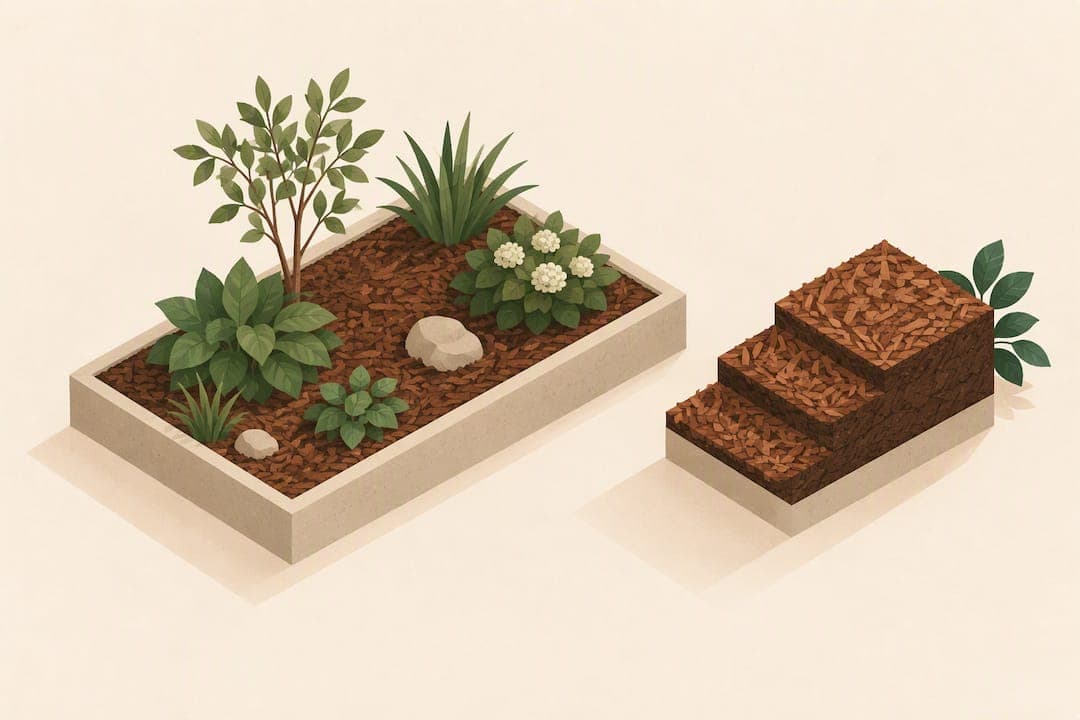
The core materials to plan for are soils and amendments, mulches, aggregates like stone and gravel, hardscape materials, and finishing materials like edging and turf. Each one has a job: grow, protect, drain, or build. Matching the material to that job, rather than buying by habit, is what keeps a project on budget and on schedule.
TL;DR:
- A 100 square foot bed needs about 0.6 cubic yards of compost when amended 2 inches deep, while smaller jobs suit bagged compost.
- Apply wood chips and pea gravel 3 to 4 inches deep, or straw and dried leaves 4 to 6 inches; keep mulch away from stems.
- For drainage behind walls or under paving, choose washed, open graded crushed rock over pea gravel; a smaller choker layer helps keep soil out.
- Light footpaths typically need a compacted base 4 inches deep; patios and driveways need 6 to 8 inches to reduce settling and heaving.
- Bagged materials cost more per unit but suit small jobs; bulk delivery lowers unit costs above roughly 3 cubic yards, though suppliers may set minimums.
Table of Contents
- Soils and Soil Amendments: Topsoil, Planting Mixes, and Compost
- Mulches: Organic vs. Inorganic, Depths, and Common Mistakes
- Decorative Stone and Aggregates: Pea Gravel vs. Washed Rock
- Hardscape Materials: Pavers, Concrete, Stone, and the Base Beneath Them
- Edging, Turf, Groundcovers, and Landscape Fabric
- How to Choose Materials and Estimate Quantities Before You Buy
- Turning a Plan Into an Exact List Without the Math
- Common Landscape Plants and Their Material Requirements
- Tools and Equipment Needed for Installation
- Environmentally Friendly and Sustainable Landscape Materials
- Seasonal Considerations for Material Selection
- Maintenance Materials: Fertilizers and Weed Control to Plan For
- Typical Quantities for Lawns, Beds, and Paths
- Practical priorities when choosing materials
- Turn your plan into an itemized shopping list
- FAQ
- Sources
Soils and Soil Amendments: Topsoil, Planting Mixes, and Compost
Topsoil, planting mix, and compost solve different problems, even though garden centers often shelve them side by side. Topsoil is bulk fill, used to raise grade or build a bed's base. Planting mix is topsoil blended with organic matter for container beds or raised beds where drainage and nutrition both matter. Compost is a soil amendment, not a soil replacement: it feeds structure and microbial life rather than filling volume.
For new beds, compost guidance from Snohomish County recommends mixing 1 to 2 inches of compost into the top 6 to 8 inches of soil before planting. In established beds, the same compost works as a topdressing, applied in a thin layer and left for worms and rain to carry down.
Quantity math is simple once you convert area to volume:
- A 100 square foot bed amended 2 inches deep needs about 0.6 cubic yards of compost.
- Bagged compost suits small beds or topdressing, usually under 2 cubic yards total.
- Bulk delivery is cheaper per yard once you pass roughly 3 cubic yards, but most suppliers have delivery minimums worth checking before you order.
Mulches: Organic vs. Inorganic, Depths, and Common Mistakes
Organic mulches, wood chips, shredded bark, straw, and dried leaves, break down over time and feed the soil as they go. Inorganic mulches like pea gravel or decorative stone do not decompose, which makes them useful around dry-climate beds or paths but means they add nothing to soil structure.

Extension guidance recommends applying most mulches, including wood chips and pea gravel, to a depth of 3 to 4 inches, while straw or dried leaves go on at 4 to 6 inches, according to Colorado State University Extension. Going deeper than that does not add protection; it starts to smother roots and trap excess moisture against stems.
A few habits prevent most mulch problems:
- Keep mulch a few inches back from trunks and stems to avoid rot and rodent nesting.
- Resist topping off a bed every season without first checking the existing depth.
- Plan to replenish organic mulch yearly as it breaks down, while inorganic stone mostly just needs occasional weeding.
For a closer look at pricing by the yard and simple coverage rules, our mulch cost guide breaks down typical ranges and a quick rule of thumb for how much mulch a tree or bed actually needs.
Decorative Stone and Aggregates: Pea Gravel vs. Washed Rock
Pea gravel reads as decorative: smooth, rounded stone that works well as a path surface, a mulch alternative in dry beds, or a border accent. It is not an engineering material, and using it where drainage or load-bearing matters is a common and avoidable mistake.
For drainage behind retaining walls, under paving, or around downspouts, stormwater specifications from the City of Gresham call for washed, open-graded crushed rock, typically in the ¾ inch to 1.5 inch range, rather than rounded pea gravel. A finer "choker layer" of smaller rock separates the coarse drain rock from the surrounding soil so the system does not clog over time.
When you order:
- Specify "washed, open-graded aggregate" by name if the use is structural, since suppliers stock pea gravel and crushed rock separately.
- Measure the drainage trench or base area in square feet, then convert to cubic yards using your planned depth.
- Ask about a choker layer whenever drain rock sits directly against native soil.
Hardscape Materials: Pavers, Concrete, Stone, and the Base Beneath Them
Concrete pavers, poured concrete, and natural stone each trade off cost, appearance, and durability. Pavers are modular and easy to repair individually; poured concrete is faster to install over large areas but cracks as one piece; natural stone costs more but weathers well and fits informal gardens.
None of these surfaces last without the right base. A compacted layer of crushed stone, topped with a thin bedding layer of sand, spreads load and lets water drain instead of pooling under the surface.
- Light foot-traffic paths typically need a 4 inch compacted base.
- Patios and driveways carrying more weight usually call for 6 to 8 inches of compacted base.
- Skipping base depth is the single most common reason pavers heave or settle unevenly within a year or two.
Our garden path design guide covers specific width and depth numbers for walkways if you are sizing a path rather than a full patio.
Edging, Turf, Groundcovers, and Landscape Fabric
Edging keeps mulch, gravel, and turf from migrating into each other, and the material you pick depends on the look and the job. Metal edging gives a clean, nearly invisible line for curves. Plastic edging costs less but flexes and can heave with frost. Natural stone or brick edging holds up to mower contact and works well bordering a bed next to a lawn.
For ground cover, the choice comes down to speed versus cost:
- Sod gives an instant lawn but costs more and needs careful watering the first few weeks.
- Seed costs far less but takes weeks to establish and needs protection from foot traffic.
- Low groundcovers or artificial turf suit shaded areas or yards where mowing is not practical.
Landscape fabric is often oversold as a permanent weed barrier. Extension research notes that fabric and plastic sheeting under mulch tend to block oxygen and water exchange, and they clog with soil and debris over a few seasons, often making weeding harder rather than easier.
Pro Tip: Skip permanent fabric under organic mulch beds; a thick, properly maintained mulch layer suppresses weeds just as well without smothering the soil underneath.
How to Choose Materials and Estimate Quantities Before You Buy
A short decision sequence keeps material choices from becoming guesswork:
- Define the function first: are you trying to grow something, protect soil or roots, move water, or build a surface people will walk on?
- Match durability and maintenance to how much time you want to spend; gravel and stone need less upkeep than organic mulch or lawn.
- Factor in your climate and existing soil, since heavy clay drains differently than sandy soil and changes how much amendment or aggregate you need.
- Set a budget range before shopping so delivery minimums and bulk discounts do not push you into over-ordering.
Once you know what you need, convert area into volume. Multiply length by width to get square footage, then multiply by depth in feet to get cubic feet, and divide by 27 to reach cubic yards. A 10 by 20 foot bed mulched 3 inches deep comes out to roughly 1.9 cubic yards.
A few practical notes on cost:
- Order 5% to 10% extra on bulk materials to cover settling and uneven grade.
- Bagged materials cost more per unit than bulk delivery but avoid waste on small jobs.
- Delivery minimums and local availability often swing total cost more than the material price itself.
For a longer view on how these choices add up over the life of a yard, our landscape cost guide walks through planning costs across a 10 to 25 year horizon.
Turning a Plan Into an Exact List Without the Math
Hand calculations work for a single bed, but a yard with multiple beds, a path, and a patio multiplies the chances of a measurement error. A 3D planning layout lets you sketch beds, paths, and structures to scale and get materials and quantities calculated directly from the geometry, with pricing attached to every object so a change in bed size updates the shopping list automatically. That means fewer trips back to the supplier for a forgotten yard of gravel and a cleaner handoff if a contractor is doing the installation.
Common Landscape Plants and Their Material Requirements
Different plant types draw on different material lists, so it helps to group plants by what they need rather than by name alone. Trees and shrubs mainly need a mulch ring kept away from the trunk, plus enough topsoil or planting mix at installation to settle the root ball without burying the crown. Perennial beds lean more on compost, since they get reworked and amended more often than a tree's root zone ever will.
Raised vegetable beds have the heaviest soil demands of any common planting: a full mix of topsoil and compost rather than native soil, because they are enclosed and cannot draw nutrients from surrounding ground. Lawns are the opposite case, relying on topsoil only at installation and then on mulch-free maintenance inputs like fertilizer and overseeding mix afterward.
Groundcovers and drought-tolerant plantings often pair with inorganic mulch, since gravel suits the low-water conditions those plants prefer and avoids the moisture retention that organic mulch brings. Before locking in a plant list, Michigan State University Extension recommends checking site conditions such as soil type, drainage, and microclimate, since a plant and material combination that works in one corner of a yard can fail a few feet away under different shade or drainage.
Matching plant choice to material needs upfront avoids a second round of soil amendment or mulch six months after planting, once a struggling plant reveals the mismatch.
Tools and Equipment Needed for Installation
Most landscape material jobs need the same core toolkit regardless of scale. A wheelbarrow and a square-point shovel move bulk material from a delivery pile to the bed or path. A bow rake levels mulch, gravel, or topsoil once it is in place, and a hand tamper or plate compactor compresses base material under pavers or patios so it does not settle unevenly later.
For edging and smaller detail work, a half-moon edger or a spade cuts a clean line between lawn and bed. Hardscape projects add a rubber mallet for setting pavers and a level or string line to keep courses even across a patio or wall.
Soil and compost work benefits from a soil knife or hand trowel for close-in planting, plus a garden fork to loosen compacted native soil before amending it. Larger aggregate or base jobs on a tight timeline sometimes call for a rented mini skid-steer, though most residential beds and paths do not need equipment beyond hand tools.
A tarp or heavy-duty mulch bags for transporting small loads rounds out the list for most projects, along with work gloves and eye protection when cutting pavers or stone.
Environmentally Friendly and Sustainable Landscape Materials
Material choice affects a yard's water use and waste footprint as much as its appearance. Locally sourced stone and aggregate cut transportation impact compared with stone shipped long distances, and many suppliers can tell you where a given load of gravel or crushed rock originated.
Compost made from yard waste or municipal programs recycles organic material back into soil rather than sending it to a landfill, and it reduces the need for synthetic fertilizer over time by improving the soil's own nutrient cycling. Organic mulches offer a similar benefit: they break down into the soil instead of persisting as waste, unlike landscape plastic sheeting, which extension guidance advises against as a permanent surface because it blocks the oxygen and water exchange soil needs to stay healthy.
Permeable paving options, gravel, permeable pavers, or open-jointed stone, let rainwater soak into the ground rather than running off into storm drains, which matters most in yards with heavy clay or existing drainage problems. Drought-tolerant groundcovers paired with inorganic mulch reduce irrigation needs in dry climates, cutting water use without sacrificing coverage.
Choosing durable materials over disposable ones is itself a sustainability decision: a well-based paver patio or a properly sized drain rock system lasts decades, while an undersized or mismatched material often needs replacing within a few years, doubling its resource cost.
Seasonal Considerations for Material Selection
Timing affects which materials perform well and which ones struggle. Compost and soil amendments work best applied in spring or fall, when soil is workable and not frozen or waterlogged, giving microbes time to integrate the organic matter before extreme heat or cold sets in.
Mulch timing depends on the goal: a spring application conserves soil moisture through summer heat, while a fall application insulates roots ahead of winter freeze and thaw cycles. Applying mulch too early in spring, before soil has warmed, can actually slow soil warming and delay plant growth.
Hardscape installation, pavers, concrete, and base aggregate, generally goes best in moderate temperatures, since concrete cures poorly in freezing conditions and compacted base material can shift if the ground underneath is still frozen or overly saturated. Many regions see hardscape contractors booked solid in late spring and early summer, so planning material orders a season ahead avoids both weather problems and scheduling backlogs.
Sod is more forgiving of season than seed, since it can be laid most of the year outside of deep winter, while grass seed needs a window of mild temperatures and consistent moisture to germinate reliably. Aligning material purchases with the season they perform best in often matters more than the material choice itself.
Maintenance Materials: Fertilizers and Weed Control to Plan For
Planning a landscape project means budgeting for what keeps it healthy after installation, not just what goes in on day one. Fertilizer needs vary by what you planted: lawns typically need a scheduled feeding program, while many shrubs and trees need little beyond an annual topdress of compost.
Weed control strategy depends heavily on the mulch and bed design already in place. A properly depthed organic mulch layer suppresses most weed pressure on its own, which is one reason extension sources draw a firm line between mulch's surface role and compost's soil-building role: mulch keeps weed seeds from germinating at the surface, while compost works underground to build the structure that helps desired plants outcompete weeds in the first place.
Pre-emergent herbicide is a planning-stage material for beds with a known weed problem, applied before weed seeds germinate rather than after weeds appear. Spot treatment for perennial weeds that push through mulch is more practical than broad chemical application in most home landscapes.
Budgeting a small line item for replenishment mulch, a spring fertilizer application, and occasional spot weed control keeps ongoing costs predictable rather than reactive.
Typical Quantities for Lawns, Beds, and Paths
Rough quantity benchmarks help you sanity-check a supplier's quote or your own measurements before ordering. A standard residential lawn renovation typically needs topsoil spread 1 to 2 inches deep across the entire area, meaning a 1,000 square foot lawn needs roughly 3 to 6 cubic yards of topsoil for grading alone, before seed or sod goes down.
Planting beds amended with compost at the 1 to 2 inch depth recommended for new beds need about 0.3 to 0.6 cubic yards of compost per 100 square feet. A mulched bed at the extension-recommended 3 to 4 inch depth needs roughly 1 cubic yard per 100 square feet of coverage.

Paths scale with width as much as length: a 3 foot wide path needs proportionally less base and surface material than a 5 foot wide path of the same length, so confirming width before ordering avoids a mid-project shortfall. A typical residential path base at 4 inches deep needs about 1.2 cubic yards of compacted aggregate per 100 linear feet at 3 feet wide.
These figures are starting points, not substitutes for measuring your actual site, since slope, existing grade, and bed shape all shift the real number up or down.
Practical priorities when choosing materials
Plan before you buy. The biggest costs in a landscape project usually come from wrong-sized orders and material mismatched to the site, not from the materials themselves.
— Rokas
Turn your plan into an itemized shopping list
Working out cubic yards by hand gets tedious once a project has more than one bed, a path, and a patio to account for. Our 3D planning tool lets you lay out beds, paths, and structures to scale and generates a live, itemized shopping list as you design, with pricing tied to every object so a change in size updates quantities automatically.
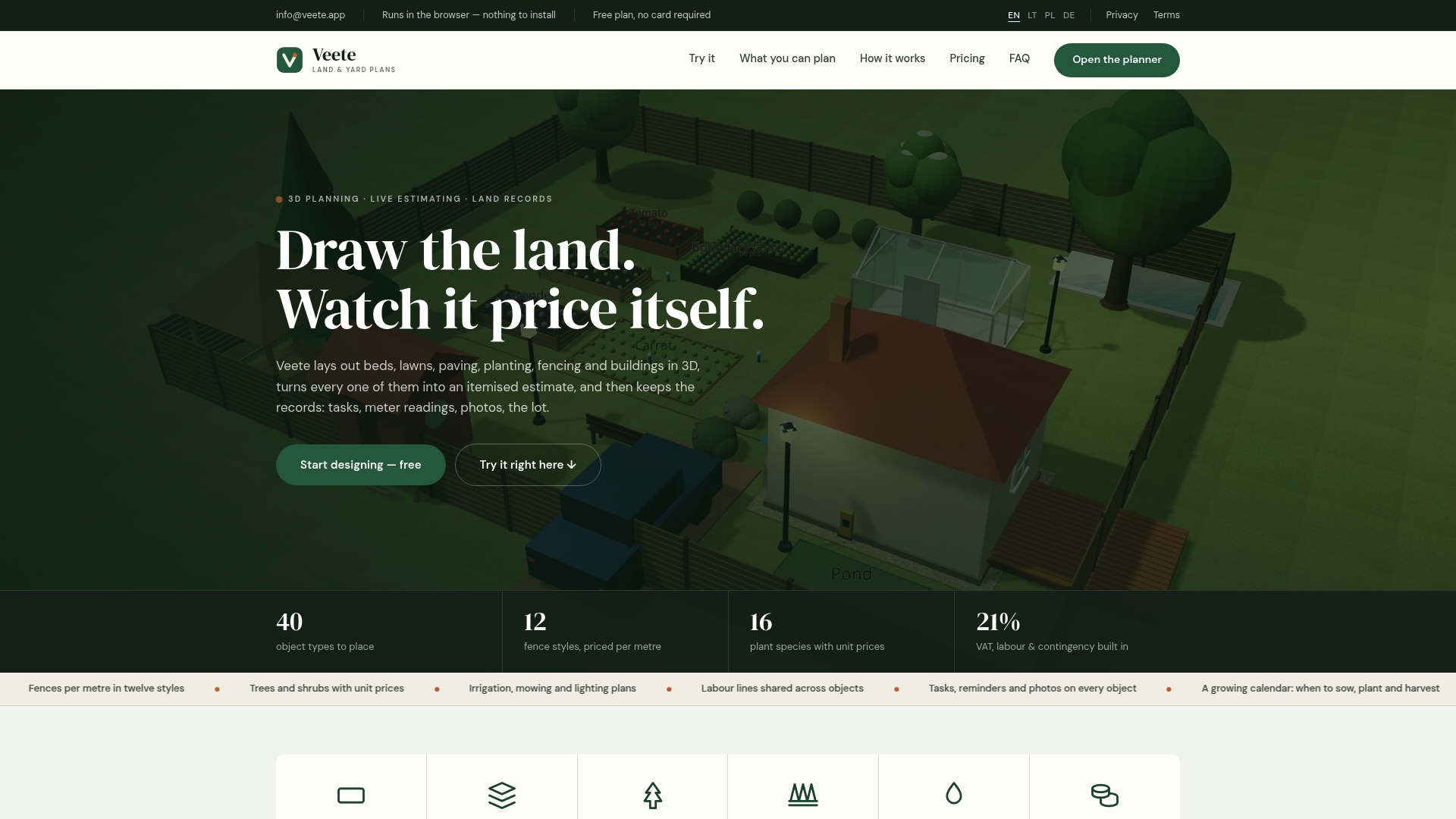
That means the material list you take to the supplier reflects your actual design rather than a rough hand estimate. Compare our Free, Home, and Pro plans to find the right level of detail for your project, whether you are planning a single bed or managing several jobs at once. If your project includes a deck alongside the planting and hardscape work, Solution Team Remodeling handles deck material selection and installation for homeowners in the Redmond, Washington area.
FAQ
What is the best landscaping material around a house?
Washed, open-graded crushed rock, typically ¾ inch to 1.5 inches, works best directly around a foundation because it drains water away rather than holding moisture against the structure, according to stormwater specifications. Decorative pea gravel can sit on top as a finish layer, but the structural drainage layer underneath matters more for the house itself.
What materials are commonly used in gardens?
Most gardens combine topsoil or planting mix for the growing layer, compost as a soil amendment, organic or inorganic mulch for surface protection, and edging to separate beds from lawn or paths. Hardscape materials like pavers, gravel, or natural stone round out paths and seating areas where plants are not the focus.
What are the 20 types of landscapes?
There is no single standardized list of "20 types of landscapes," since landscape styles are commonly grouped by region, climate, and design tradition rather than a fixed count. Common categories include formal, cottage, xeriscape, woodland, Mediterranean, and tropical gardens, each calling for a different mix of materials suited to its climate and maintenance level.
What does landscaping consist of?
Landscaping consists of planning and installing the plants, soil, and hardscape elements that shape outdoor space, including grading, soil preparation, planting, mulching, paths or patios, and edging. It also includes ongoing maintenance materials like fertilizer and mulch replenishment that keep the design looking the way it was planned.
How much mulch or soil do I actually need for a small bed?
For a 100 square foot bed, plan on roughly 1 cubic yard of mulch at the recommended 3 to 4 inch depth, or about 0.3 to 0.6 cubic yards of compost if you are amending the soil at 1 to 2 inches deep, based on extension application guidance. Measuring the bed's exact square footage first keeps the order close to what you will actually use.
Sources
- Compost guidance — Snohomish County
- Stormwater facility material specifications — City of Gresham appendix